Wedding Seating Chart Etiquette: Who Sits Where?
It's the most dreaded task in wedding planning: the seating chart. Here are the unwritten rules for keeping everyone happy (and avoiding family drama).
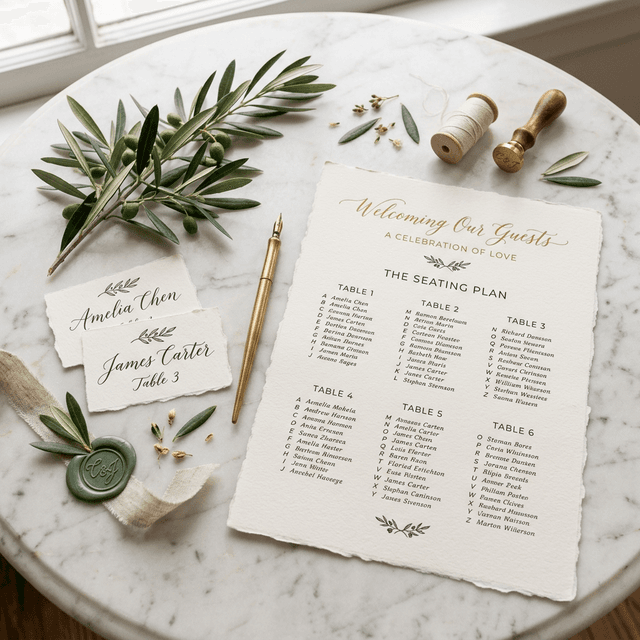
Do we really *need* a seating chart?
Yes. Absolutely yes. One of the biggest misconceptions couples have is that "open seating" (where guests sit wherever they want) is more relaxed. In reality, open seating causes the opposite:
- Couples get split up because only single seats are left.
- Guests experience anxiety trying to find a spot like it's a high school cafeteria.
- You have to rent 20% more chairs and tables to accommodate the awkward gaps.
A seating chart is a gift to your guests. It tells them exactly where to go.
The Golden Rule of Seating
"Seat people with people they *know*, not people you think they should meet."— Every Wedding Planner Ever
Where Do The Couple Sit?
You have two main options:
Option 1: The Sweetheart Table
A small, intimate table just for the two of you.
Pros: You actually get to talk to each other and eat. It also solves the problem of how to fit the wedding party's plus-ones at a head table.
Option 2: The Head Table
A long rectangular table with the couple in the middle, flanked by the wedding party.
Pros: Highly traditional and looks great in photos. Cons: It splits up wedding party members from their dates.
Navigating Family Drama
If parents are divorced and do not get along, do not put them at the same table. The solution is simple: each set of parents gets their own dedicated "VIP table" hosted by them, filled with their respective family members and close friends. Place these tables at equal distances from the sweetheart table so no one feels slighted.
The "Singles" Table
Please avoid the dreaded "singles table." Instead of grouping all your unmarried friends together regardless of their interests, seat your single friends at tables where they know at least one other person, or where they share a common interest (e.g., college friends, coworkers).
Frequently Asked Questions
Where should divorced parents sit at a wedding?
Should couples always sit together at a wedding?
How do I handle seating for guests who do not know anyone?
When should I finalize my wedding seating chart?
Ditch the Sticky Notes.
Stop trying to organize 150 people with paper and pencil. Our digital Canvas lets you drag, drop, and rearrange guests in seconds.
Try the Seating Chart Maker