How to Create a Wedding Day Timeline
The secret to a stress-free wedding isn't just great vendors—it's a bulletproof schedule. Here is how to map out the best day of your life.
Our editorial team combines decades of wedding industry experience with data-driven insights to help couples plan their perfect day.
Why Your Timeline Dictates Everything
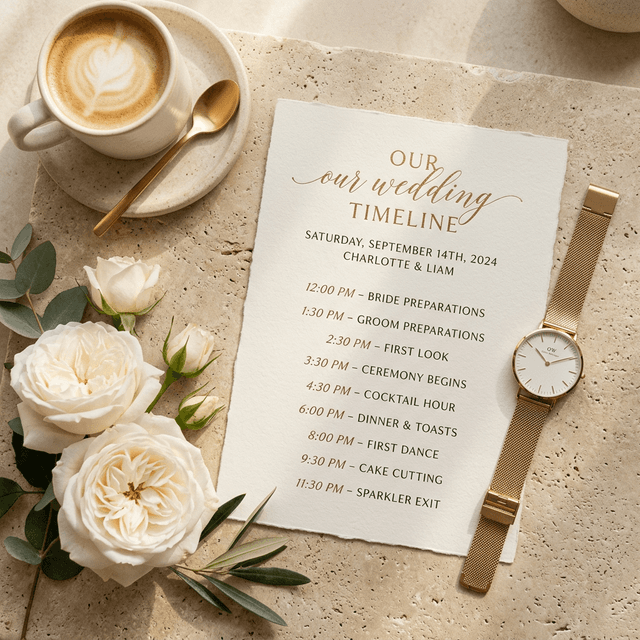
Your wedding timeline isn't just a list of events; it's the operational manual for your entire vendor team. Your photographer uses it to know when the lighting will be best. Your caterer uses it to know exactly when to fire the steaks. Your hair and makeup team uses it to determine their call time.
Without a solid timeline, you risk rushed photos, cold food, and unnecessary anxiety. Let's break down how to build one.
Step 1: Start With the Ceremony
The ceremony time is your anchor. Every other event is scheduled relative to this moment.
- Sunset: Check what time the sun sets on your wedding date. Ideally, you want your ceremony to end 1.5 to 2 hours before sunset for the best "golden hour" portraits.
- Venue Restrictions: Does your venue have a strict cut-off time (e.g., music must end by 10:00 PM)? Keep this in mind.
Example: The Classic "First Look" Timeline
Assuming a 5:00 PM Ceremony and a 10:00 PM End Time.
Step 2: Buffer, Buffer, Buffer
The most common mistake couples make is packing the schedule too tightly. Things will run late. Someone won't be able to find their shoes. A corsage will get pinned on wrong. Traffic will happen.
Pro Tip: Add a hidden 15-minute buffer before the ceremony, and schedule 45 minutes for family photos even if you think it will only take 20.
Step 3: Communicate With Your Vendors
Your photographer and planner are the experts here. Draft an initial timeline and send it to them for review. They will tell you immediately if you haven't allocated enough time for sunset portraits or if the catering team needs more time to flip a room.
Frequently Asked Questions
How long does a wedding ceremony typically last?
What time should hair and makeup start on a wedding day?
Should you do a first look before the wedding ceremony?
How long should a wedding reception cocktail hour be?
Related Articles
Build Your Digital Itinerary
Use our interactive timeline builder to drag, drop, and easily share your entire wedding day schedule with your VIPs.
Start Planning for Free